Science Meets Skincare.
In-depth ingredient breakdowns, routine guides, trend analysis, and product deep dives: written by people who care about the science.
Editor's Pick
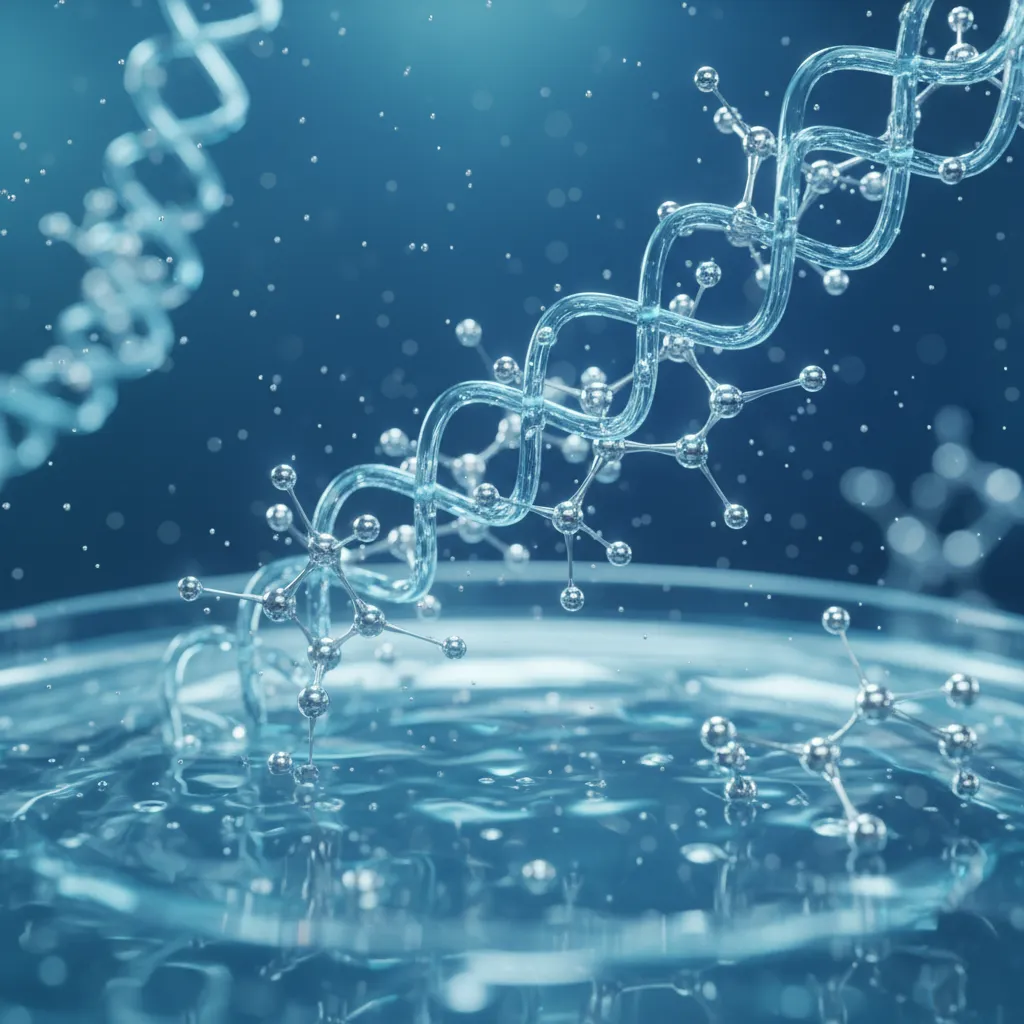
PDRN: The Salmon DNA Revolution Taking Over Korean Skincare Clinics
Polydeoxyribonucleotide extracted from salmon sperm DNA was once the exclusive domain of medical clinics treating chronic wounds and sports injuries. Today, it's the most talked-about anti-aging active in K-Beauty, appearing in serums, ampoules, and even at-home devices. We explore the science, the evidence, and why dermatologists are genuinely excited.
Read Article →44 Ingredients guides
Tranexamic Acid in Skincare: The Melasma Ingredient Rivaling Hydroquinone
Tranexamic acid blocks the plasmin pathway that UV exposure activates to trigger melanin production. Clinical trials now show it performing comparably to hydroquinone with fewer side effects.
Read More →
Mugwort in K-Beauty: What the Science Says About Artemisia's Calming Reputation
Mugwort has become K-beauty's go-to calming herb, but the evidence behind it is more limited (and more specific) than the marketing suggests. We break down what's actually been studied.
Read More →
Heartleaf (Houttuynia Cordata): K-Beauty's Calming Ingredient
Heartleaf became one of K-beauty's biggest ingredient stories almost overnight. The lab data is real but mostly preclinical: here's what it can and can't do for irritated skin.
Read More →
Propolis in Skincare: The Bee Resin Behind K-Beauty's Glow Serums
Propolis delivers a genuine glow and antibacterial activity, but it's also one of the more common contact allergens in natural skincare. Both halves matter.
Read More →
Salicylic Acid (BHA): The Only Acid That Gets Inside the Pore
Salicylic acid's oil solubility is what separates it from every AHA. Here's the concentration, pH, and formulation detail that decides whether it works on your skin.
Read More →
Glycolic Acid & AHAs: The Surface Exfoliants, Explained Properly
Glycolic acid is the smallest AHA, which is exactly why it penetrates fastest and irritates most. The concentration and pH rules regulators actually set, and the sun-sensitivity data.
Read More →
Squalane: The Boring Oil That Works on Almost Everyone
Squalane is a hydrogenated version of a lipid your own skin already makes. That one chemical change is why it doesn't oxidise, doesn't clog pores, and suits nearly every skin type.
Read More →
Best Glycolic Acid & AHA Products 2026: Ranked by Concentration and Tolerability
The best AHA product isn't the strongest one; it's the strongest one your skin will tolerate three times a week for a year. Ranked by acid type, concentration, and who each suits.
Read More →
Fermented Skincare: What Galactomyces and Ferment Filtrates Actually Do
Fermentation built the Korean essence category. Galactomyces has more mechanistic research behind it than most botanicals, and a founding story that deserves more scepticism than it gets.
Read More →Ginseng in Skincare: The Evidence Behind Korea's Signature Ingredient
Ginseng anchors Korea's entire luxury tier, and unlike most heritage botanicals it has actual randomised trial data for wrinkles. The trials are small, but they exist.
Read More →
Hyperpigmentation: How to Actually Fade Dark Spots
Melasma, post-inflammatory marks, and sun spots are three different problems that respond to different things. Getting the diagnosis right matters more than which serum you buy.
Read More →
Acne: What Actually Clears It, Ranked by Evidence
Dermatology guidelines are unusually clear about what works for acne, and the answer is mostly two ingredients used together. The evidence tier list, and when topicals stop being the answer.
Read More →
Fungal Acne (Malassezia Folliculitis): Why Your Acne Routine Isn't Working
It isn't acne and it isn't fungus in the way you'd assume; it's a yeast overgrowth in the follicle that mimics acne and gets worse with acne treatment. How to tell, and what works.
Read More →
Adenosine: The Anti-Wrinkle Ingredient Korea Regulates and the West Ignores
Adenosine is in a remarkable share of Korean products and almost no Western ones. That gap isn't about efficacy; it's about a regulatory category with no equivalent outside Korea.
Read More →Polynucleotides vs PDRN: The Distinction Korea's Clinics Care About
PN and PDRN both come from salmon DNA and are not the same molecule. The difference explains Rejuran's rise, and why almost none of that evidence transfers to the serum on your shelf.
Read More →Panthenol (Vitamin B5): The Ingredient Doing the Quiet Work in Your Routine
Panthenol is in almost every calming and barrier-repair product made, and almost never on the front of the box. It's exactly as good as it claims and no better.
Read More →
Volufiline: The 'Filler in a Bottle' Ingredient, Examined
Volufiline went viral as topical filler. The lab mechanism is real; the human evidence is one small manufacturer study. Here's what to reasonably expect.
Read More →Beta-Glucan in Skincare: The Barrier Ingredient Having Its Moment
Beta-glucan is having a moment as barrier care replaces 'more actives'. It's a genuinely good soothing humectant; the 'better than hyaluronic acid' claim doesn't hold up.
Read More →
Mushroom Skincare: Reishi, Tremella and Chaga, Sorted by Evidence
Mushroom extracts are moving into serious skincare. Tremella is a credible hydrator; reishi and chaga are promising soothers with mostly lab evidence.
Read More →
Glutathione in Skincare: What the Brightening Evidence Really Shows
Glutathione is in a wave of K-beauty dark-spot serums. Topical glutathione has modest, real evidence for brightening, and results fade when you stop.
Read More →
Ectoin: The 'Extremophile' Barrier Ingredient Going Mainstream
Ectoin, made by microbes that survive extreme heat and salt, is suddenly in barrier creams everywhere. Its evidence is small but genuinely clinical.
Read More →Peptide Complex Hair Density Serums: The Science of Copper Tripeptides and Hair Growth
GHK-Cu, Biotinoyl Tripeptide-1, and Redensyl are rewriting hair-loss treatment. The peer-reviewed science behind the $60–$90 leave-in serums dominating scalp health search.
Read More →Vitamin C + E + Ferulic Acid Serums: The Science Behind the Most Trusted Antioxidant Formula
The Duke University antioxidant trio doubles photoprotection and stimulates collagen. The peer-reviewed evidence behind every $80–$185 bottle.
Read More →Multi-Peptide Plumping Lip Treatment Oils: The Science of Structural Lip Care
Lips have no sebaceous glands and a thinner stratum corneum, making them uniquely receptive to topical actives. The peptide and lipid science behind luxury lip oils.
Read More →Peptides in Skincare: The Complete Science Guide to Every Type
Signal, carrier, enzyme-inhibiting, neuropeptides: the peptide category spans four distinct mechanisms. We break down the clinical evidence for each and how to choose.
Read More →Matrixyl vs Argireline: The Two Most-Studied Anti-Aging Peptides Compared
Matrixyl 3000 builds collagen. Argireline reduces muscle contraction amplitude. They address entirely different ageing mechanisms, and you likely need both.
Read More →
Augustinus Bader's TFC8: The Stem Cell Science Behind the $265 Cream
A real stem cell researcher's proprietary complex, TFC8, anchors one of the most expensive luxury moisturizer lines on the market. We separate what's published from what's proprietary marketing.
Read More →SK-II's Pitera: The Fermented Yeast Science Behind the $99–$320 Essence
Discovered by accident in a sake brewery, Pitera anchors SK-II's entire prestige line. We look at the fermentation science and how it compares to $20 galactomyces dupes.
Read More →
La Mer's Miracle Broth: Is the $190–$530 Fermented Kelp Cream Worth It?
An aerospace physicist fermented sea kelp for over a decade to heal his own burn scars. The real history behind Crème de la Mer, and an honest look at the evidence.
Read More →Growth Factor Serums: The Science Behind SkinMedica TNS and Alastin
Human fibroblast conditioned media vs. synthetic peptide complexes: the most clinically documented anti-aging serums dermatologists actually recommend, priced $235–$325.
Read More →24K Gold Skincare: The Science (and Marketing) Behind $100–$300 Products
Colloidal gold has real research behind it in nanomedicine, but does that translate to a $150 face cream? We separate the physics from the shimmer.
Read More →Idebenone: The Synthetic 'Super Antioxidant' Behind Prevage's $150+ Serum
A pharmaceutical antioxidant developed for cognitive disorders, repurposed into Elizabeth Arden's flagship anti-aging line. The real chemistry behind the 'better than CoQ10' claim.
Read More →Bee Venom vs. Royal Jelly: Two Very Different Premium 'Bee' Skincare Stories
Rodial's Bee Venom and Guerlain's Abeille Royale are both bee-derived, and mechanistically nothing alike. We separate the two, including a real bee-allergy safety note.
Read More →La Prairie's Skin Caviar: Is the $190–$590 Caviar Extract Cream Worth It?
A Swiss 'cellular therapy' clinic from the 1930s, a trademarked caviar extract, and one of the most expensive creams on the mainstream market. The real history and the honest evidence.
Read More →Swiss Apple Stem Cell Extract: The Science Behind Juice Beauty's $140+ Cream
A rare, long-lasting Swiss apple variety inspired a patented plant stem cell extract used across premium skincare. What it actually does, and what plant stem cells definitely don't do.
Read More →Retinaldehyde: The Retinoid Between Retinol and Prescription Tretinoin
One fewer conversion step than retinol, better tolerated than tretinoin: Medik8 built its entire brand around this molecule. The real vitamin A conversion chemistry, explained.
Read More →
Niacinamide 101: Why This Vitamin B3 Does Everything
From shrinking pores to fading hyperpigmentation, niacinamide is the overachiever of skincare. A complete breakdown of its mechanisms and ideal concentrations.
Read More →Retinol for Beginners: How to Start Without Wrecking Your Skin
Retinol is the most clinically validated anti-aging active without a prescription. But starting wrong causes unnecessary irritation. Here's the evidence-based guide.
Read More →Vitamin C Serums: Why L-Ascorbic Acid Is Worth the Instability
L-ascorbic acid is the only form of vitamin C with substantial clinical evidence for photoprotection and brightening. Here's what the science says.
Read More →Hyaluronic Acid: Why You're Probably Applying It Wrong
Hyaluronic acid is in almost every moisturiser on the market. But molecular weight and application technique dramatically affect whether it actually hydrates your skin.
Read More →Ceramides: The Barrier-Building Ingredient Your Skin Is Probably Missing
Ceramides make up over 50% of the skin's outer barrier lipids. When they deplete, everything cascades: sensitivity, dehydration, accelerated aging.
Read More →
Azelaic Acid: The Underrated Ingredient That Does It All
Brightening, acne-clearing, rosacea-calming, and pregnancy-safe: azelaic acid does things no other single ingredient can. Time to spotlight this dermatology staple.
Read More →Copper Peptides vs. Retinol: The Anti-Aging Showdown
Both stimulate collagen synthesis and reduce fine lines. But how do copper peptides (GHK-Cu) and retinoids actually compare in clinical studies?
Read More →
Hypochlorous Acid: Your Skin's Own Defense Molecule in a Bottle
HOCl is the molecule your immune cells naturally produce to fight infection. In skincare form, it's a gentle, microbiome-friendly antimicrobial transforming sensitive skin care.
Read More →