Affiliate disclosure: This article contains Amazon affiliate links. As an Amazon Associate, Glowstice earns from qualifying purchases — at no extra cost to you. Our editorial recommendations are independent of these partnerships. Learn more · How we evaluate products
Retinol is the gold standard topical anti-aging active — the most clinically studied cosmetic ingredient available without a prescription, with decades of peer-reviewed evidence behind it. It stimulates collagen synthesis, accelerates cell turnover, reduces hyperpigmentation, and unclogs pores. The problem is not efficacy: it's the learning curve. Used incorrectly, retinol causes the 'retinoid uglies' — a weeks-long stretch of dryness, flaking, and redness that drives most beginners to quit before seeing results. This guide explains how to start correctly, build tolerance intelligently, and get the results retinol is clinically proven to deliver.
What Is Retinol?
Retinol is a form of vitamin A — specifically, a retinoid. The retinoid family spans a spectrum of potency: retinoic acid (prescription-only tretinoin) is the active form that directly binds retinoic acid receptors in skin cells; retinol is a step below, requiring conversion to retinaldehyde and then retinoic acid by skin enzymes before becoming active; retinyl esters (retinyl palmitate, retinyl acetate) require two conversion steps and are weaker still.
The conversion chain matters because it explains both retinol's tolerability advantage over tretinoin and its slightly slower results. Tretinoin binds receptors directly; retinol must be enzymatically converted, which takes time but also means less receptor saturation and lower irritation risk. For most people, this trade-off is worth it — particularly during the months it takes to build tolerance.
Retinol should not be confused with 'vitamin A' supplements (oral retinoids carry a completely different risk profile) or with bakuchiol (a plant-derived functional analog that mimics retinol's gene expression effects without binding the same receptors).
How Retinol Works
Retinol, once converted to retinoic acid, binds to nuclear retinoic acid receptors (RAR) and retinoid X receptors (RXR). This binding directly regulates gene expression, triggering a cascade of beneficial changes in skin biology:
Collagen stimulation: Retinoic acid upregulates procollagen type I gene expression in dermal fibroblasts while simultaneously inhibiting matrix metalloproteinase-1 (MMP-1), the primary enzyme that breaks down existing collagen. The net result is increased collagen production and reduced collagen degradation — the two levers of anti-aging.
Cell turnover acceleration: Retinol stimulates keratinocyte proliferation and normalizes differentiation, thickening the epidermis and speeding the shedding of dead surface cells. This addresses fine texture, dullness, and mild pigmentation.
Melanin regulation: By accelerating cell turnover, retinol prevents melanin from accumulating in surface keratinocytes, gradually reducing the appearance of dark spots. It also has some direct inhibitory effects on tyrosinase.
Pore and acne effects: Retinol reduces abnormal follicular keratinization — the process that creates microcomedones, the precursor to all acne. This makes it effective for both anti-aging and acne management.
The initial irritation phase occurs because the sudden upregulation of receptor-mediated activity overwhelms the skin's homeostatic capacity before it acclimatizes — not because retinol is 'purging' toxins, as often incorrectly claimed.
Related Reading
Editor's Product Picks
Affiliate links — we earn a small commission at no extra cost to you.

Low-Dose Retinol Serum (0.025–0.05%)
What to look for — not a specific productPrice varies typical range
Shop Now →Mid-Strength Retinol Treatment (0.1%)
What to look for — not a specific productPrice varies typical range
Shop Now →Retinol + Ceramide Moisturiser
What to look for — not a specific productPrice varies typical range
Shop Now →Prices last checked on September 27, 2026 and rounded to the dollar. Amazon prices change often; the price shown at checkout is the one that applies.
The Clinical Evidence
Retinol has one of the most robust evidence bases in cosmetic dermatology.
Anti-Aging: A landmark 1986 study by Kligman et al. in the Journal of the American Academy of Dermatology demonstrated that topical tretinoin (retinoic acid) applied to photodamaged skin significantly increased epidermal thickness and type I procollagen synthesis — confirmed via skin biopsies, and the foundational research underlying retinoid anti-aging claims generally, including later work on lower-strength OTC retinol. The 2019 American Academy of Dermatology guidelines list retinoids as the highest-evidence topical anti-aging intervention available OTC.
Pigmentation: Multiple controlled trials confirm that retinol effectively fades post-inflammatory hyperpigmentation and melasma over 12–24 weeks of consistent use, with the mechanism primarily mediated by accelerated keratinocyte turnover.
Acne: The FDA has approved topical tretinoin (prescription retinoic acid) for acne since 1971. Studies on OTC retinol show comparable comedolytic effects at higher concentrations (0.1%+), with effect size scaling with concentration and duration.
The honest limitation: the majority of gold-standard evidence uses prescription-strength tretinoin or retinaldehyde; fewer large-scale RCTs have evaluated OTC retinol specifically. However, the mechanistic pathway is identical — just slower — and the available retinol-specific studies consistently support comparable (if slower-onset) benefits.
Concentration Guide
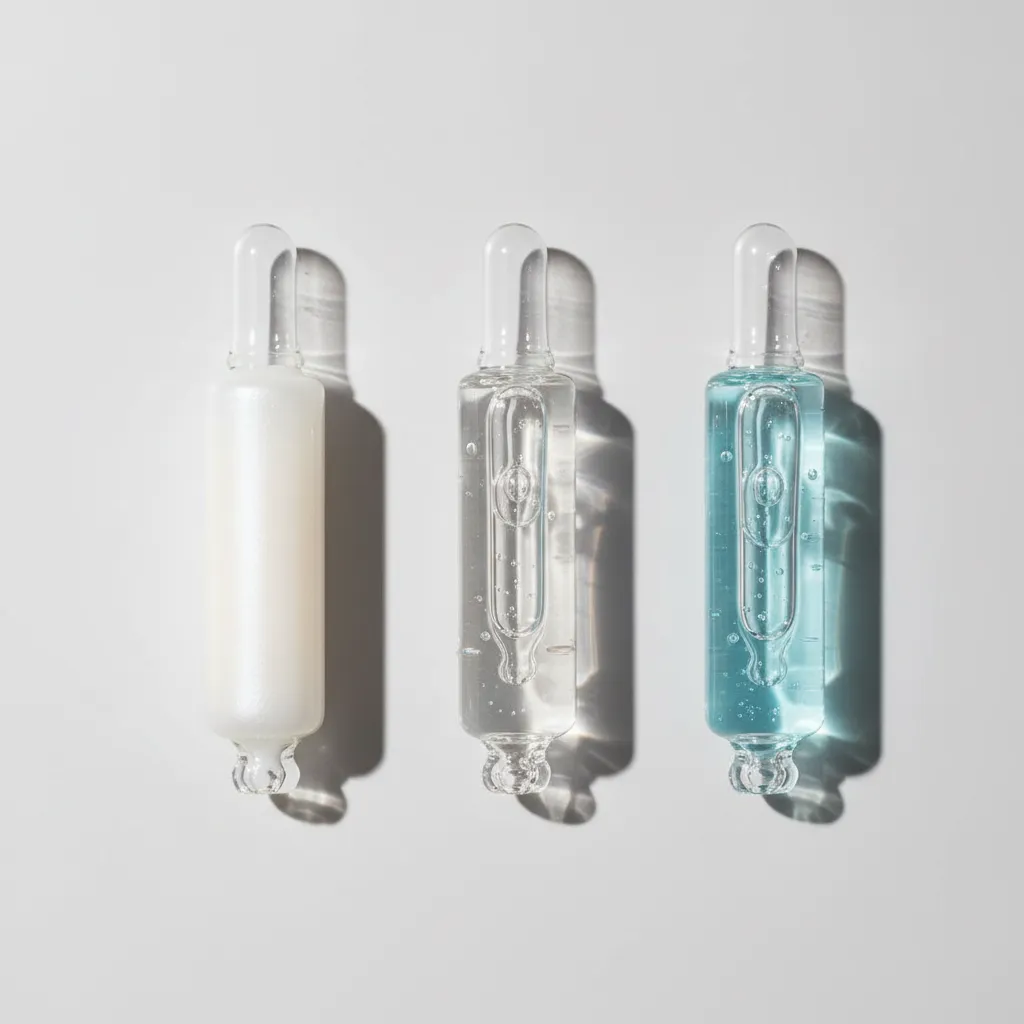
Retinol products range from approximately 0.01% to 1%. Here's how to navigate the spectrum:
0.01–0.025%: Ultra-low dose, suitable for first-time users or those with very sensitive or reactive skin. Effective at stimulating cell turnover and improving texture with minimal irritation risk. Takes longer to show visible anti-aging results — expect 6+ months.
0.025–0.05%: Low-dose range — the ideal starting point for most healthy adults. Provides meaningful cell-turnover and collagen-stimulating effects with manageable initial adjustment. Concentrations in this range are common in the retinol studies that have followed the foundational tretinoin research on epidermal thickening and collagen synthesis.
0.1%: Mid-strength — a significant step up. Move here after 3–4 months of tolerating 0.05% well. Noticeable acceleration of results, with proportionally more initial irritation potential during the transition phase.
0.3–0.5%: High-strength OTC retinol — approaches the efficacy seen in some prescription-strength studies. Suitable only after months of building tolerance. Many users never need to go beyond 0.1% and see excellent results.
1%: Maximum OTC concentration in most markets. Frequently marketed as 'retinol maximum strength' but not necessarily appropriate or more effective for most users beyond what 0.3% achieves.
Note on retinaldehyde: Some products use retinaldehyde (retinal) instead of retinol. It requires only one conversion step to retinoic acid (versus two for retinol), making it approximately 11× more potent than retinol at equivalent concentrations. Products labeled as 0.05% retinaldehyde behave more like 0.5% retinol in terms of activity.
How to Start: The 'Low and Slow' Protocol
The most effective beginner approach is universally described as 'low and slow' — low concentration, low frequency, built up gradually.
Weeks 1–4: Apply 0.025–0.05% retinol once per week, on a single evening. This gives skin time to begin acclimatizing to retinoid receptor activity without overwhelming it. Apply to fully dry skin (not slightly damp) to reduce penetration rate and irritation.
Weeks 5–8: Increase to twice weekly if weeks 1–4 were well tolerated (minimal redness, flaking, or tightness). Continue at twice weekly until there is no irritation response.
Weeks 9–12: Move to every other evening. This is the 'maintenance frequency' for most people using 0.025–0.05%.
Week 13+: Daily evening use becomes the goal once tolerance is fully established at your current concentration. At this point you can consider moving to the next concentration tier if desired.
The 'sandwich method': For sensitive skin, apply retinol between two layers of moisturiser — one before, one after. The moisturiser acts as a buffer, diluting percutaneous absorption and significantly reducing irritation. Efficacy is maintained over a slightly longer timeframe.
Buffering with squalane: Mixing a drop of retinol into a few drops of squalane or jojoba oil before applying is another way to physically reduce irritation during the tolerance-building phase.
Layering & Dos / Don'ts
AVOID on the same evening as retinol: Direct AHAs (glycolic, lactic acid) and BHAs (salicylic acid) applied in the same step — the combination significantly increases irritation risk and skin sensitivity without meaningful benefit. Benzoyl peroxide can oxidise retinol, reducing its stability.
USE alongside retinol: Hyaluronic acid (applied before or after) and ceramide-based moisturisers are ideal companions — they buffer the barrier disruption that retinol temporarily induces. Peptides (including copper peptides) should be used on alternating evenings from retinol rather than combined; direct mixture may reduce copper peptide efficacy.
Daytime considerations: Retinol significantly increases photosensitivity. Apply only at night and use a minimum SPF 50 every morning without exception. Sun exposure without SPF after retinol use negates its anti-aging benefits and increases hyperpigmentation risk.
During pregnancy: Retinoids are contraindicated during pregnancy at all concentrations — including OTC retinol. Switch to bakuchiol (a pregnancy-safe functional analog) during this period.
Storage: Retinol degrades with air, light, and heat exposure. Store products in opaque, airtight packaging away from sunlight. Products in clear jars or non-airless packaging with significant air exposure lose efficacy faster.
Author
Glowstice Editorial
The Glowstice editorial team consists of skincare researchers, cosmetic chemists, and science writers dedicated to translating peer-reviewed dermatology into practical guidance for curious consumers.