Affiliate disclosure: This article contains Amazon affiliate links. As an Amazon Associate, Glowstice earns from qualifying purchases — at no extra cost to you. Our editorial recommendations are independent of these partnerships. Learn more · How we evaluate products
Quick Picks
Affiliate links: we may earn a commission at no extra cost to you.
| Product | Price | Link |
|---|---|---|
6.5% Retinoid Blend incl. 1% Encapsulated Retinol Sunday Riley A+ High-Dose Retinol Serum | ~$85 | Shop Now → |
Best Advanced Paula's Choice Clinical 1% Retinol Treatment | ~$49 | Shop Now → |
Pure Retinol + Niacinamide + Hyaluronic Acid La Roche-Posay Retinol B3 Serum | ~$35 | Shop Now → |
Best Value RoC Retinol Correxion Deep Wrinkle Retinol Serum | ~$21 | Shop Now → |
Best Beginner CeraVe Resurfacing Retinol Serum | ~$16 | Shop Now → |
Best Clinical SkinCeuticals Retinol 0.3 | Brand site | Shop direct → |
Prices last checked on September 27, 2026 and rounded to the dollar. Amazon prices change often; the price shown at checkout is the one that applies.
Retinol has accumulated more clinical evidence than virtually any other over-the-counter skincare active. Over 700 peer-reviewed studies support retinoids as effective treatments for fine lines, textural irregularity, hyperpigmentation, and acne — with the mechanism understood down to the nuclear receptor level. Retinol binds retinoic acid receptors (RARs) in skin cells, upregulating genes that drive collagen synthesis, cell turnover, and melanin dispersal. The challenge isn't whether retinol works — it's whether your specific product actually contains what it claims, at the concentration stated, in a stable enough formulation to remain active until it reaches your skin. Retinol is notoriously unstable: it oxidizes on contact with air and light, converting to retinaldehyde and then to dehydroretinol, both of which have dramatically reduced biological activity. A formula that starts at 0.5% retinol can degrade to near-zero efficacy within months if not properly stabilized and packaged. We ranked these serums on four criteria: concentration accuracy (verified or credibly stated), formulation stability (encapsulated retinol, antioxidant preservation, packaging), clinical evidence for the specific formula, and skin tolerance based on formulation vehicle and supporting actives. Every product on this list delivers what it promises.
The Retinol Conversion Pathway
Understanding retinol efficacy requires understanding its conversion pathway in skin. Retinol itself has no direct biological activity — it must be enzymatically converted to retinaldehyde (retinal) by alcohol dehydrogenases in the skin, and then from retinaldehyde to all-trans retinoic acid (tretinoin) by retinaldehyde dehydrogenases. This two-step conversion is what limits topical retinol's potency compared to prescription tretinoin: only a fraction of applied retinol completes the full conversion, and the process is rate-limited by enzyme availability.
This is why 0.025% tretinoin (prescription) is often more effective than 0.5% retinol OTC — the retinol still requires conversion, and not all of it completes that pathway. However, the same conversion rate that reduces retinol's efficacy also explains its dramatically better tolerance profile: the skin is never exposed to the full dose of retinoic acid that prescription formulations deliver directly.
Retinal (retinaldehyde) sits one conversion step ahead of retinol and one step behind tretinoin. Some premium OTC products now use retinal at 0.05–0.1% concentrations, achieving faster results than equivalent retinol concentrations with a better tolerance profile than tretinoin. Granactive retinoid (hydroxypinacolone retinoate) is another next-generation derivative that bypasses the conversion pathway entirely, binding RARs directly without enzymatic activation — offering tretinoin-comparable receptor binding with minimal irritation.
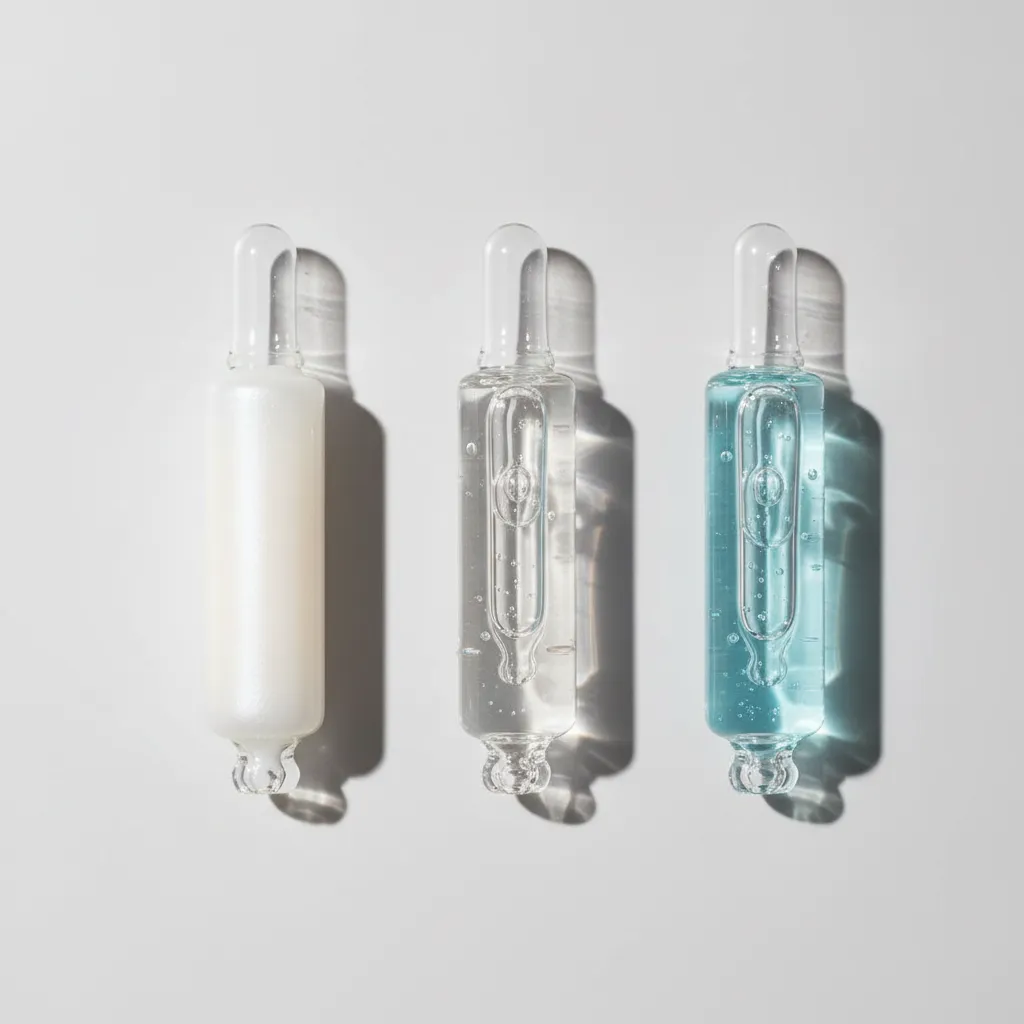
Retinol Concentration Guide: What Level Do You Need?
Retinol concentrations in skincare products are poorly standardized — brands may list 'retinol' without specifying pure retinol versus a retinol ester (retinyl palmitate, retinyl acetate) that requires additional conversion steps and is significantly weaker. Always check INCI lists.
0.025–0.05%: Ideal starting concentration. Sufficient to begin signaling collagen genes with minimal irritation. Best for: first-time retinol users, sensitive skin, pregnancy prep (some very low concentrations are considered acceptable; consult your physician).
0.1–0.3%: Standard clinical range. Multiple RCTs confirming visible fine line reduction, textural improvement, and pigmentation fading at 12–24 weeks. Best for: users who tolerated 0.025–0.05% for 4–8 weeks without significant peeling or redness.
0.5–1.0%: High-strength OTC. Approaches the efficacy of very low-dose prescription retinoids. Expect a 4–6 week adjustment period with possible dryness, peeling, and photosensitivity. Best for: experienced retinol users building toward prescription-strength results.
1.0%+: Maximum OTC concentration (some brands offer up to 2%). At these levels, formulation vehicle and supporting actives (barrier repair ceramides, peptides, squalane) matter enormously for tolerability. Best for: dermatologist-supervised users as a prescription bridge.
Related Reading
Editor's Product Picks
Affiliate links — we earn a small commission at no extra cost to you.
CeraVe Resurfacing Retinol Serum
~$16
Sold by Amazon.comShop Now →La Roche-Posay Retinol B3 Serum
~$35
Sold by Amazon.comShop Now →
SkinCeuticals Retinol 0.3
Price on brand site
Not sold on Amazon. We earn nothing from this link.Buy direct from SkinCeuticals →
Sunday Riley A+ High-Dose Retinol Serum
~$85
Sold by Amazon.comShop Now →
Paula's Choice Clinical 1% Retinol Treatment
~$49
Sold by Paula's Choice Skincare, a third-party sellerShop Now →
RoC Retinol Correxion Deep Wrinkle Retinol Serum
~$21
Sold by Amazon.comRoC's Line Smoothing serum isn't listed on Amazon, so this links the current RoC Retinol Correxion Deep Wrinkle Retinol Serum.Shop Now →Prices last checked on September 27, 2026 and rounded to the dollar. Amazon prices change often; the price shown at checkout is the one that applies.
Best for Beginners: Gentle Introductory Formulas
CeraVe Resurfacing Retinol Serum ($16) is the best beginner retinol for one primary reason: the retinol is encapsulated in a time-released microsphere delivery system that slows absorption and significantly reduces irritation potential versus free retinol. The formula also contains three essential ceramides (1, 3, 6-II) and niacinamide to simultaneously support the barrier while retinol drives cell turnover — addressing the most common retinol side effect (compromised barrier function) at the formulation level.
La Roche-Posay Retinol B3 Serum ($35) pairs pure retinol with niacinamide (vitamin B3) and hyaluronic acid, using the scientifically supported synergy between retinol (cell turnover) and niacinamide (barrier support, sebum regulation, pigmentation inhibition). La Roche-Posay uses a gradual-release retinol and positions the serum for sensitive skin and retinol beginners.
For absolute beginners, start with every-third-night application for the first two weeks, then increase to every other night for weeks 3–4, then nightly once skin demonstrates tolerance. Always apply SPF50 daily when using any retinoid — retinol makes skin meaningfully more photosensitive even without visible peeling.
Mid-Strength: 0.3–0.5% Clinical Range
SkinCeuticals Retinol 0.3 is sold direct by SkinCeuticals rather than on Amazon. It is a 0.3% pure retinol cream that SkinCeuticals recommends for first-time retinol users, with stabilization and controlled-release delivery to limit irritation, plus bisabolol and boswellia serrata extract to soothe skin. The 0.3% concentration sits in the middle of the standard clinical range described above.
Sunday Riley A+ High-Dose Retinol Serum ($85) takes a blended approach. Sunday Riley describes a 6.5% retinoid solution: a 5% retinoid ester blend, a 1% liposome-encapsulated retinol blend and 0.5% blue-green algae, with encapsulated CoQ10 and soothing bisabolol. Because most of that blend is retinoid esters, which need extra conversion steps, the headline 6.5% is not comparable to 6.5% pure retinol. It suits users who want a multi-retinoid formula rather than a single high dose.
Advanced Strength: 1% and the Paula's Choice Standard
Paula's Choice Clinical 1% Retinol Treatment ($49) represents the best-value advanced-strength retinol formula on the market. The 1% pure retinol concentration sits at the maximum effective OTC level, formulated with antioxidant vitamins C and E to support retinol stability and minimize oxidative degradation after opening.
The formula includes peptides that provide synergistic collagen signaling alongside retinol's RAR-mediated mechanism — addressing both the transcriptional pathway (retinol) and the extracellular matrix pathway (peptides) simultaneously. At 1%, this is not a beginner formula: expect 4–6 weeks of adjustment including potential flaking, redness, and temporary barrier disruption.
For users who have tolerated 0.5% retinol for 3+ months without significant sensitivity, Paula's Choice 1% is the most clinically significant OTC step before consulting a dermatologist about prescription tretinoin. At $49 for 1 fl oz, it also represents exceptional value relative to luxury competitors at equivalent concentrations.
RoC Retinol Correxion Deep Wrinkle Retinol Serum ($21) stands in for RoC's Line Smoothing serum, which isn't listed on Amazon. RoC says daily use is clinically shown to deliver smoother skin in 4 weeks and to diminish the look of photodamage in 8 weeks, pairing retinol with its mineral complex at a drugstore price.
Retinol Stability: How to Preserve Your Serum
Retinol degrades via two pathways: oxidation (exposure to atmospheric oxygen) and photodegradation (UV and visible light exposure). Once a retinol serum begins oxidizing, it turns yellow-orange and the active concentration declines — a bottle that opened fresh at 0.5% may effectively contain 0.1% by the time you finish it if stored incorrectly.
Storage rules: keep retinol serums in a cool, dark location away from the bathroom mirror shelf (heat and humidity accelerate oxidation). Opaque or amber packaging reduces photodegradation. Airless pump dispensers are superior to dropper bottles or jar packaging because they minimize atmospheric exposure per dose.
Formulation stability markers: antioxidant stabilizers in the INCI list (tocopherol, ascorbyl palmitate, ferulic acid) extend retinol shelf life. Time-released encapsulation (micro-emulsion, liposomal, or microsphere delivery) both improves tolerance and reduces degradation by limiting retinol's exposure to air until it reaches skin.
A colour change to deep yellow or orange is the clearest sign your retinol has oxidized significantly. A mild yellow tint at opening is normal for pure retinol; dramatic colour deepening over time indicates oxidative degradation and reduced efficacy.
Author
Glowstice Editorial
The Glowstice editorial team consists of skincare researchers, cosmetic chemists, and science writers dedicated to translating peer-reviewed dermatology into practical guidance for curious consumers.