Affiliate disclosure: This article contains Amazon affiliate links. As an Amazon Associate, Glowstice earns from qualifying purchases — at no extra cost to you. Our editorial recommendations are independent of these partnerships. Learn more · How we evaluate products
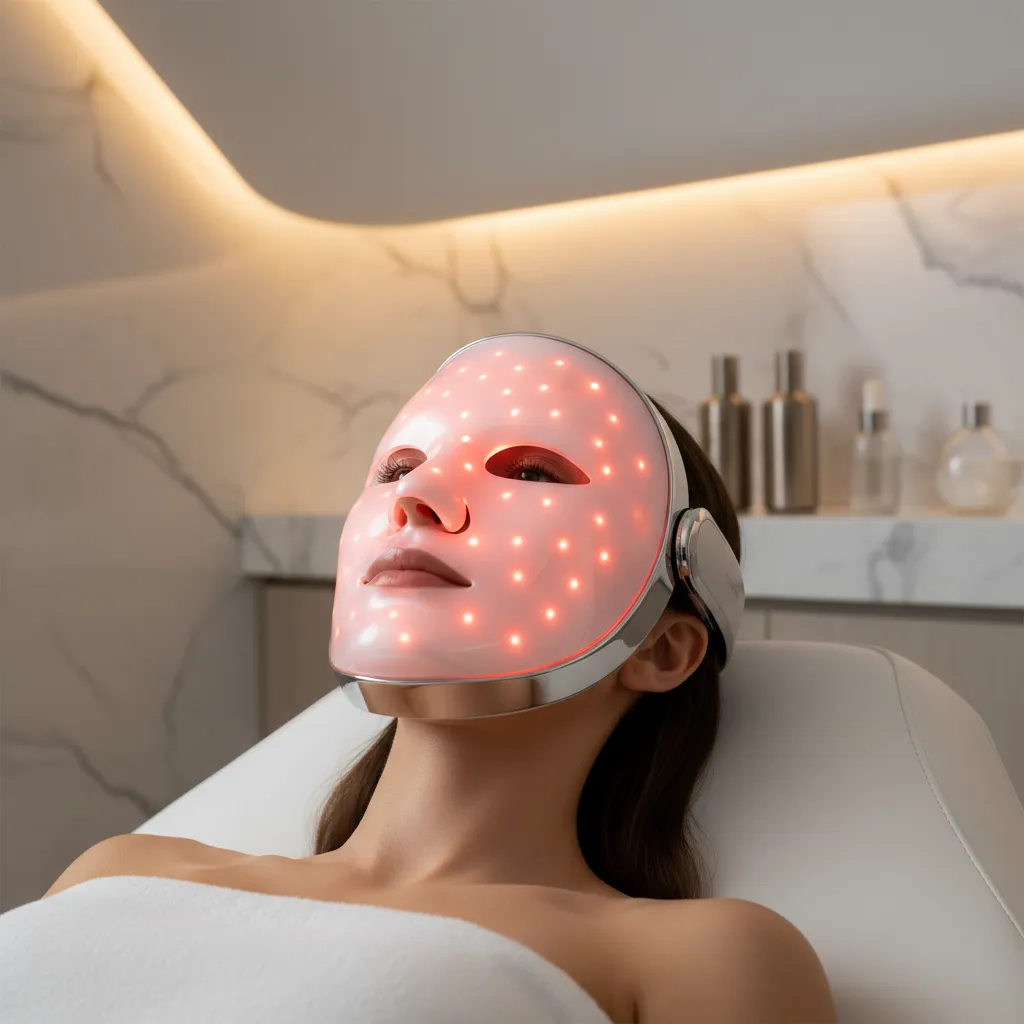
LED (light-emitting diode) photobiomodulation has been used in clinical dermatology and sports medicine for over three decades. It is the only non-thermal light-based treatment with a substantial body of peer-reviewed evidence for skin rejuvenation, wound healing, and inflammation reduction. The emergence of consumer-grade LED face masks — full-face devices that deliver targeted light wavelengths at home — has made this technology accessible for the first time outside of clinics. But the market is full of devices ranging from genuinely effective to complete optical theatre. This guide gives you the science to tell them apart.
What Is LED Light Therapy?
LED light therapy, formally known as photobiomodulation (PBM) or low-level light therapy (LLLT), works by delivering specific wavelengths of visible and near-infrared light to skin cells at non-thermal (non-heating) intensities. Unlike laser or IPL treatments that work through thermal destruction of target tissue, LED therapy does not damage tissue — it stimulates biological processes at the cellular level by interacting with photoreceptors in skin cells.
The primary photoreceptor in mammalian cells for red and near-infrared light is cytochrome c oxidase, a key enzyme in the mitochondrial electron transport chain. When cytochrome c oxidase absorbs photons in the 630–850nm range, it increases the rate of ATP (adenosine triphosphate) production — boosting cellular energy available for repair, synthesis of structural proteins, and regenerative processes.
This mechanism is distinct from UV-based treatments. UV light (below 400nm) causes DNA damage and photodegradation that the skin subsequently repairs — the tan response is a UV damage response, not a beneficial biological stimulation. LED therapy in the red and NIR range stimulates without inducing damage, making it suitable for all skin types and compatible with ongoing skincare routines.
Wavelengths: Red, NIR, Blue & Green — What Each Does
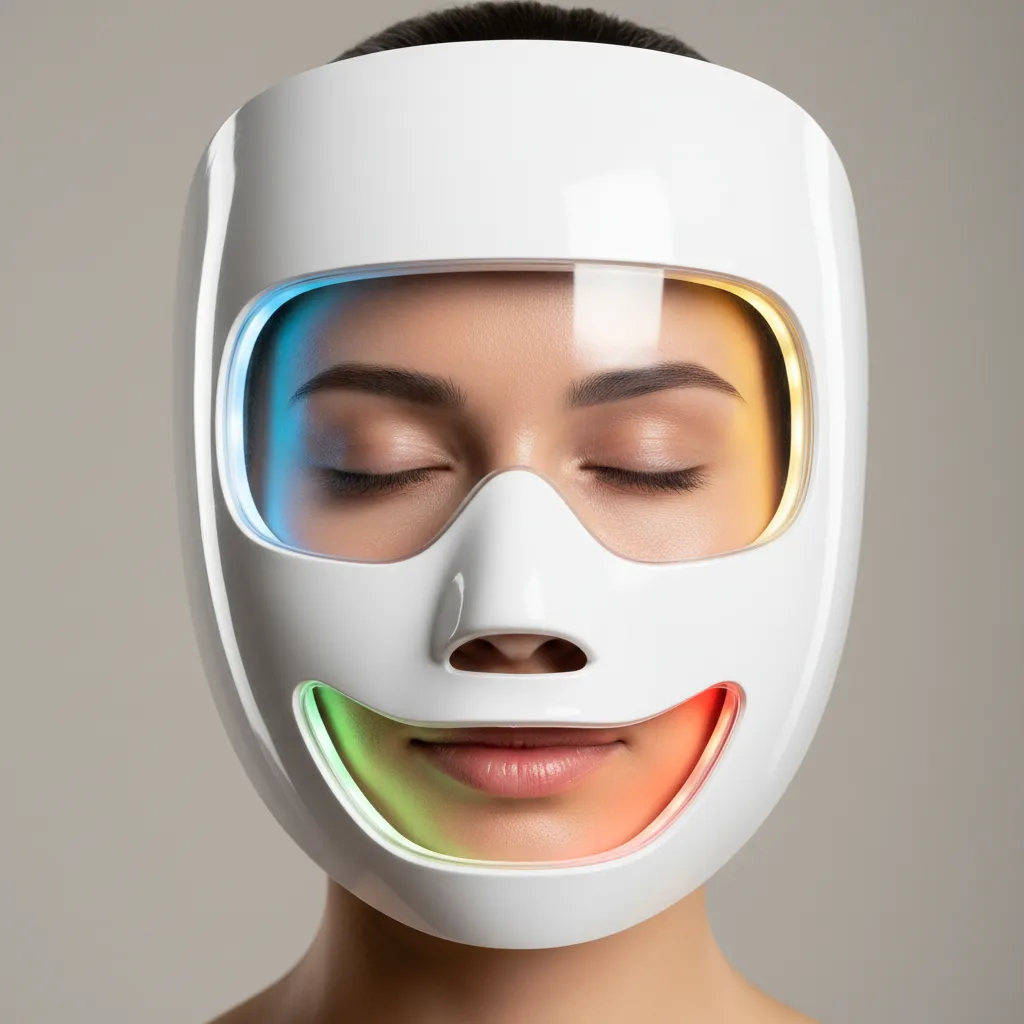
The therapeutic effects of LED light are wavelength-specific. Different wavelengths penetrate to different skin depths and interact with different biological targets:
Red Light (630–680nm): The most clinically studied wavelength for cosmetic dermatology. Penetrates approximately 1–2mm into skin, primarily reaching the epidermis and upper dermis. Key effects: stimulates fibroblast ATP production, increases type I and III collagen synthesis, reduces oxidative stress, promotes wound healing and re-epithelialisation. The 633nm and 660nm wavelengths have the strongest evidence base.
Near-Infrared (NIR, 810–850nm): Penetrates deeper than red light — up to 3–5mm — reaching the deeper dermis and potentially underlying fascia. Key effects: reduces inflammation via prostaglandin modulation, stimulates deeper collagen remodelling, promotes microcirculation, and accelerates muscle and connective tissue recovery. The 830nm wavelength is most frequently used in evidence-based devices.
Blue Light (415–430nm): Does not penetrate below the epidermis but kills Cutibacterium acnes (acne bacteria) via photodestruction of porphyrins — compounds naturally produced by C. acnes that become toxic when exposed to blue light. Effective for inflammatory and non-inflammatory acne with a good evidence base specifically for this application. Not appropriate for daily anti-aging use due to potential free radical generation with prolonged exposure.
Green Light (520–530nm): Acts on melanocytes and pigmented cells, partially inhibiting melanin synthesis pathways. Has emerging evidence for hyperpigmentation reduction and redness (haemoglobin absorption). Weaker evidence base than red or NIR for primary anti-aging benefits.
Yellow/Amber (590nm): Some evidence for reducing erythema and rosacea-associated redness. Less studied than red, NIR, or blue.
For anti-aging purposes, a mask that delivers both 630–660nm red and 830nm near-infrared simultaneously covers the two most evidence-backed wavelengths and addresses both surface (collagen stimulation) and deeper (inflammation, microcirculation) processes.
Related Reading
Editor's Product Picks
Affiliate links — we earn a small commission at no extra cost to you.
How It Works at a Cellular Level
The primary mechanism of photobiomodulation operates through the mitochondrial pathway. When red or NIR photons are absorbed by cytochrome c oxidase in mitochondria, the enzyme's activity increases, releasing nitric oxide (NO) that had been inhibiting it. This NO release has several downstream effects:
ATP upregulation: The freed cytochrome c oxidase increases the electron transport chain's efficiency, producing more ATP. Cells with more ATP have greater capacity for collagen synthesis, repair, and proliferation.
Reactive oxygen species (ROS) signalling: A transient, controlled increase in ROS at photobiomodulation doses acts as a signalling molecule (hormesis), activating protective antioxidant pathways (Nrf2 pathway) and growth factor release — including TGF-β1, which is a primary driver of collagen synthesis in fibroblasts.
Growth factor cascades: PBM has been shown to increase expression of VEGF (vascular endothelial growth factor, promoting microcirculation), FGF (fibroblast growth factor, stimulating fibroblast proliferation), and IGF-1 (insulin-like growth factor 1, promoting cell survival and protein synthesis).
Inflammation modulation: NIR wavelengths specifically reduce nuclear factor kappa B (NF-κB) activity — one of the primary pro-inflammatory signalling pathways — while increasing IL-10 (an anti-inflammatory cytokine). This explains the anti-inflammatory effects observed in rosacea and post-procedure recovery.
Clinical Evidence for LED Face Masks
LED photobiomodulation has accumulated a substantial clinical literature over three decades, originating in wound care and sports medicine before expanding into aesthetic dermatology:
Anti-Aging (Collagen): A well-cited 2014 study by Wunsch and Matuschka in Photomedicine and Laser Surgery randomised 136 subjects to receive either 633nm red light, 830nm NIR, both wavelengths, or placebo. After 30 twice-weekly sessions, both active groups showed statistically significant improvements in skin complexion, skin feeling, procollagen I density (measured via biopsy), and self-assessment of skin tone versus placebo. The combined red + NIR group showed the strongest improvements.
Acne (Blue Light): A Cochrane-quality systematic review of LED therapy for acne (published in the Journal of the American Academy of Dermatology) found that blue light therapy (415nm) reduced inflammatory acne lesion counts by 55–76% over 4–8 weeks in controlled trials — comparable to some topical treatments without antibiotic resistance implications.
Wound Healing: Multiple RCTs from the wound care literature demonstrate PBM accelerates re-epithelialisation rates and reduces wound healing time across surgical, burn, and chronic wound contexts. This evidence underpins its growing use in post-procedure skincare.
The honest limitation: many LED skincare studies use clinic-grade devices at specific irradiance levels (measured in mW/cm²) that consumer masks may not reliably replicate. FDA clearance and independent irradiance data from manufacturers are the strongest quality indicators for consumer devices.
At-Home vs Clinical Grade: What the Difference Actually Means
The distinction between at-home consumer LED devices and professional clinic devices comes down primarily to three variables:
Irradiance (power density, mW/cm²): The amount of light energy delivered per unit area per second. Clinical devices typically deliver 50–200 mW/cm²; consumer masks often deliver 10–50 mW/cm². Lower irradiance means longer treatment times are needed to accumulate equivalent energy doses (measured in J/cm² — joules per square centimetre, the clinically validated dosing unit). Consumer devices compensate via longer session times (10–20 minutes vs 3–5 minutes clinically).
Wavelength accuracy: Professional devices are calibrated and verified; consumer devices' stated wavelengths should be verified via independent lab testing. Reputable consumer brands provide spectral analysis data; brands that do not are a yellow flag.
FDA clearance (USA) / CE marking (Europe): FDA clearance for a specific indication (e.g., 'for treatment of mild to moderate acne' or 'for temporary relief of minor muscle pain') requires demonstration of safety and some evidence of effectiveness for that claim. CE marking in Europe indicates compliance with EU medical device directives. These are minimum quality and safety thresholds — not comprehensive efficacy endorsements — but devices without any regulatory clearance for any indication are impossible to evaluate.
Conclusion for consumers: Reputable consumer LED masks with FDA clearance, documented irradiance specifications, and accurate wavelength claims can produce meaningful results with consistent use. They require longer sessions than clinical treatments but, used correctly over months, have clinical evidence supporting their efficacy.
How to Use Your LED Mask for Best Results
Session length: Consumer LED masks typically require 10–20 minutes per session to accumulate clinically validated energy doses at their lower irradiance levels. Follow the device manufacturer's protocol — it should be calibrated to their specific device's irradiance output.
Frequency: For anti-aging purposes, 3–5 sessions per week is the protocol used in most positive outcome studies. For acne (blue light), daily use is supported in the evidence. Most people see initial improvements in skin texture and tone within 4–6 weeks of consistent use; collagen remodelling improvements become visible at 8–12 weeks.
Skin preparation: Apply LED therapy to clean, dry, product-free skin. Some products, particularly those with photosensitising ingredients (certain AHAs, retinoids, some botanicals), may interact with light and increase irritation or sensitivity. Apply serums and moisturisers after the session, not before.
Eye protection: Red and NIR light is not damaging to eyes at consumer LED mask power levels, but the intense light is uncomfortable. Most quality masks include built-in eye protection or instruct users to wear protective goggles. Follow the device guidelines.
Enhancing results with post-session products: Light therapy transiently increases skin permeability and cellular metabolic activity — the 30 minutes following a session are an optimal window for applying actives like hyaluronic acid, peptide serums, or PDRN ampoules. This pairing is a common protocol in clinical settings.
Author
Glowstice Editorial
The Glowstice editorial team consists of skincare researchers, cosmetic chemists, and science writers dedicated to translating peer-reviewed dermatology into practical guidance for curious consumers.