Affiliate disclosure: This article contains Amazon affiliate links. As an Amazon Associate, Glowstice earns from qualifying purchases — at no extra cost to you. Our editorial recommendations are independent of these partnerships. Learn more · How we evaluate products
Quick Picks
Affiliate links: we may earn a commission at no extra cost to you.
| Product | Price | Link |
|---|---|---|
FDA-cleared microcurrent NuFACE Trinity+ Facial Toning Device | ~$395 | Shop Now → |
4 Microcurrent Modes + 5 T-Sonic Massage Patterns + Anti-Shock System 2.0 Foreo Bear 2 Face Toning Device | ~$284 | Shop Now → |
Nano-current + microcurrent ZIIP HALO Microcurrent Device | Brand site | Shop direct → |
Microcurrent pen NuFACE FIX MicroWand | Brand site | Shop direct → |
Microcurrent + Red LED + Cleansing + Percussive Therapy — all-in-one facial device Therabody TheraFace Pro | Brand site | Shop direct → |
Prices last checked on September 27, 2026 and rounded to the dollar. Amazon prices change often; the price shown at checkout is the one that applies.
The global at-home microcurrent device market was valued at $1.2 billion in 2024 and is projected to reach $2.8 billion by 2030. The driver is simple: visible, measurable results — a more defined jaw, lifted brows, and reduced nasolabial fold depth — achievable at home without injections. Unlike LED devices (which target the dermis) or RF (which targets the deeper fat and SMAS layer), microcurrent specifically targets the facial musculature. Understanding the electrical science behind these devices makes the difference between effective use and expensive disappointment.
Microcurrent vs EMS: Fundamentally Different Technologies
Both microcurrent and EMS (electrical muscle stimulation) use electrical current to stimulate facial muscles, but they operate in different current ranges with different physiological effects:
**Microcurrent** (0.01–1mA, typically 0.05–0.5mA): Low-level electrical current at or below the threshold of sensory nerve activation — you typically cannot feel it. At these levels, the current does not create visible muscle contraction. Instead, it operates sub-threshold, influencing cellular metabolism in muscles, connective tissue, and skin cells via changes in the electrochemical gradient across cell membranes. The primary documented effects are ATP synthesis stimulation, fibroblast activity upregulation, and "re-education" of the motor nerve-muscle pathway (thought to restore the tonic resting tension of muscles that have lost tone with age).
**EMS** (1–50mA): Current levels sufficient to cause visible, involuntary muscle contraction. You feel it as a twitching or pulsing sensation. EMS devices (Foreo Bear, MyTone, some NuFACE programmes) cause the muscle to contract and release repeatedly — analogous to a passive workout. The mechanism is different from microcurrent: it causes direct mechanical muscle fibre stimulation, leading to hypertrophy and increased tone via the same pathway as voluntary exercise.
The Cheng Study: ATP Synthesis and the Scientific Foundation
The foundational study for microcurrent's cellular effects was published by Cheng et al. in 1982 in the journal Clinical Orthopaedics and Related Research. Cheng studied the effect of electrical currents on ATP synthesis in excised rat skin and found a dose-response relationship that shaped device design for decades. It is worth being clear that this was a preclinical experiment on excised tissue, not a human trial, despite being the most-cited study in the microcurrent industry:
- At 50–500μA: ATP concentrations rose roughly three- to fivefold (300–500%) - At currents above 750μA: ATP synthesis began to decline - At currents above 1mA: ATP synthesis was suppressed below baseline
This bell curve relationship explains why professional microcurrent devices operate in the 50–400μA range and why consumer devices that market "higher is better" are missing the science. ATP (adenosine triphosphate) is the energy currency of the cell — increased ATP availability accelerates collagen synthesis in fibroblasts, improves myosin production in muscle cells (enhancing tone), and supports active ion transport across cell membranes.
The Cheng study was conducted on tissue, not living subjects, and 1982 methodology has limitations. However, subsequent in vitro and small clinical studies have consistently confirmed the ATP-stimulation mechanism within the 50–500μA range.
Related Reading
Editor's Product Picks
Affiliate links — we earn a small commission at no extra cost to you.

NuFACE Trinity+ Facial Toning Device
~$395
Sold by Front Row Group, a third-party sellerThe original Trinity has been replaced by the Trinity+.Shop Now →Foreo Bear 2 Face Toning Device
~$284
Sold by FOREO, a third-party sellerShop Now →ZIIP HALO Microcurrent Device
Price on brand site
The GX has been discontinued; the HALO is ZIIP's replacement and is sold only on ZIIP's site.Not sold on Amazon. We earn nothing from this link.Buy direct from ZIIP →NuFACE FIX MicroWand
Price on brand site
The original FIX device has been replaced by the FIX MicroWand, which we couldn't find on Amazon.Not sold on Amazon. We earn nothing from this link.Buy direct from NuFACE →Therabody TheraFace Pro
Price on brand site
Not sold on Amazon. We earn nothing from this link.Buy direct from Therabody →Prices last checked on September 27, 2026 and rounded to the dollar. Amazon prices change often; the price shown at checkout is the one that applies.
Which Facial Muscles Respond to Microcurrent Treatment
The face has 43 muscles, and not all respond equally to microcurrent. The most clinically relevant target muscles for facial contouring are:
**Zygomaticus major and minor**: elevate the lip corners, creating the lifted smile/cheek appearance. Treatment along the cheekbone from mouth corner to ear lifts these muscles.
**Frontalis**: elevates the brow. Treatment from brow to hairline targets brow elevation.
**Platysma**: a thin, broad sheet muscle covering the front of the neck. Age-related laxity creates the "turkey neck" appearance. Vertical strokes from chin to collarbone are used to tone this muscle.
**Masseter**: the chewing muscle at the jaw angle. Over-stimulation causes masseter hypertrophy, widening the jawline rather than defining it — a common mistake when beginners over-treat the jaw angle.
**Orbicularis oculi**: surrounds the eye. Gentle stimulation reduces the appearance of hooding by lifting the lateral orbital tissue.
The anatomical principle is to lift muscles from origin to insertion — the direction the muscle shortens when it contracts voluntarily. Treating in the wrong direction (insertion to origin) can have a downward rather than lifting effect.
Clinical Evidence: What the Studies Actually Show
The strongest clinical evidence for at-home microcurrent comes from NuFACE's own funded studies and independent clinical assessments of professional microcurrent devices:
**NuFACE 5-week RCT (2013)**: 45 subjects using the NuFACE Trinity twice daily for 5 weeks. Primary endpoints: standardised photography assessed by a blinded dermatologist panel. Results: 85% of subjects showed "significant" to "very significant" improvement in facial contour, with average brow lift of 1.7mm and nasolabial fold reduction of 0.8mm depth. These are modest but measurable numbers.
**Professional microcurrent devices (Healite, Myoscience)**: Multiple peer-reviewed studies in aesthetic medicine journals show 2–4mm of measurable brow lift and significant reduction in jowl appearance after 12–20 treatments. Professional devices operate at higher total current delivery (longer treatment time per muscle group) than consumer devices.
**Important caveat**: results require maintenance. Unlike RF or HIFU (which produce structural collagen changes), microcurrent's toning effect is functional — it depends on sustained muscle tone. Clinical studies consistently show that 4–8 weeks of cessation returns the face to baseline. Consumer devices require 5–10 minute maintenance sessions 3–5x per week indefinitely.
Technique Is 80% of the Result
Device quality matters less than most users expect. The key technique variables are:
**Pressure and contact area**: The two probes of a microcurrent device should maintain firm, full-contact pressure with skin throughout the stroke. Lifting one probe breaks the electrical circuit and eliminates current delivery. This is the most common user error.
**Stroke direction**: Always origin to insertion (towards the hairline, upward, not downward). Anatomical maps are provided by most brands — follow them precisely.
**Speed**: Move slowly (1cm per 2–3 seconds). Moving too fast reduces the electrical dwell time on each muscle segment and reduces treatment efficacy.
**Coverage**: Each stroke covers a muscle segment. Three strokes per segment minimum for toning effect. Most beginners under-treat — spending 90 seconds total on the full face rather than the recommended 5–10 minutes.
**Frequency**: Professional protocol is 12–20 sessions in the first 30–60 days for initial reconditioning, then 2–3x per week maintenance. Consumer device protocols suggest 5-minute sessions daily for the first 60 days, then maintenance.
Conductive Gel Science: Why the Medium Matters
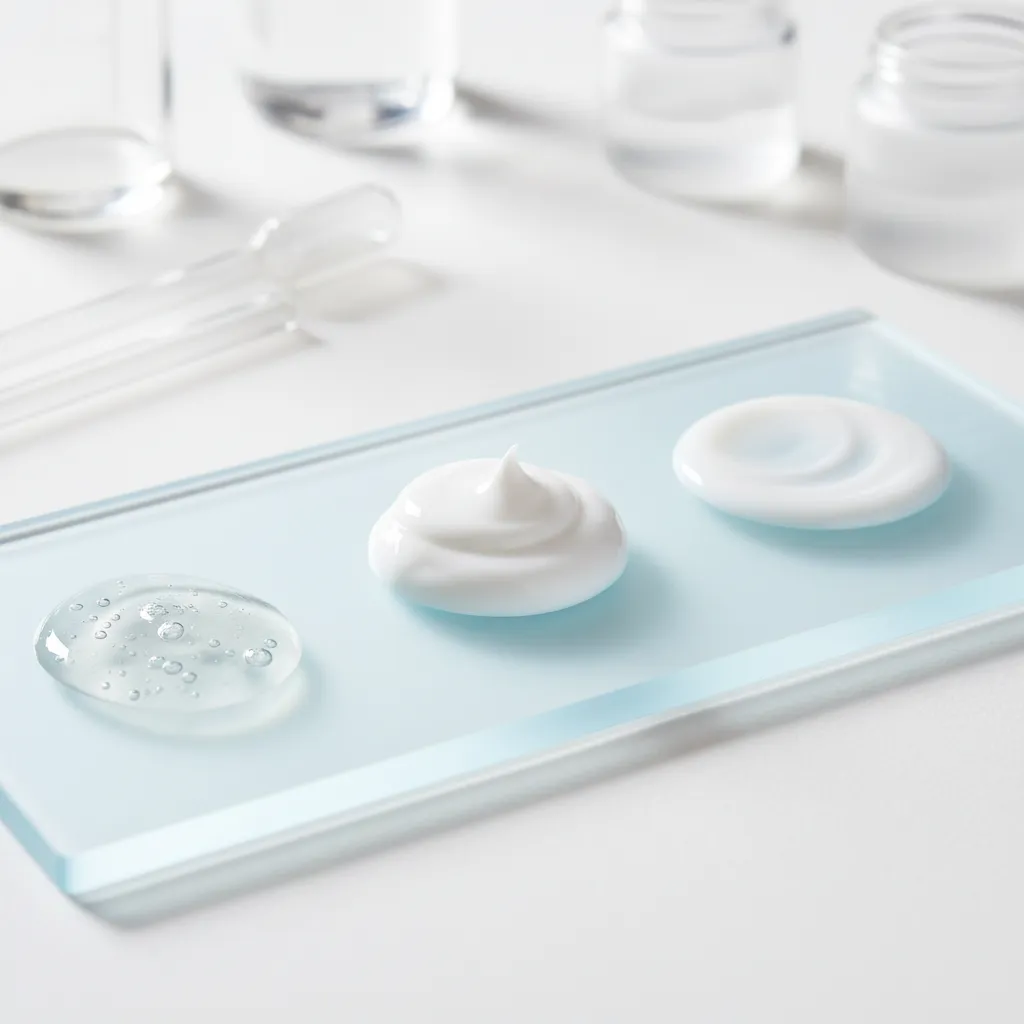
Microcurrent probes require a conductive medium between the metal tip and skin. This is not a cosmetic nicety — it is a physical requirement. Air is an electrical insulator; current will not flow through dry skin at the voltages used in consumer devices. An inadequate conductive layer means the device simply isn't working regardless of what the indicator light shows.
Conductive gels use ions (typically sodium, potassium, or chloride from dissolved salts) to carry the current from the metal probe to the stratum corneum. The gel should: - Have electrical conductivity in the range of 1–10 mS/cm (comparable to skin surface conductivity) - Be non-occlusive enough to allow some current penetration - Not contain AHAs, retinol, or vitamin C (low pH disrupts the current pathway and can cause tingling or mild erythema) - Contain humectants (glycerin, hyaluronic acid) to prevent drying during treatment
Brand-proprietary gels are not necessary — any clean, ionic, water-based gel works. Aloe vera gel is an acceptable substitute. However, avoid glycolic acid toners as a substitute — the acid disrupts skin pH and can cause discomfort.
Author
Glowstice Editorial
The Glowstice editorial team consists of skincare researchers, cosmetic chemists, and science writers dedicated to translating peer-reviewed dermatology into practical guidance for curious consumers.